
By Thomas Williams, All American Renovations
───────────────────────────────────────
Because a price and a budget range are two different things, and you should get them at two different times. You can have a range in the first conversation — I’ll give you one. What you can’t have on day one is a number somebody will stand behind for the length of the job, because nobody has decided yet what’s going in. A price is the last thing a renovation produces, not the first.
And I know how that sounds when you’re the one asking. You called a contractor. You asked a simple question. You got told it’s complicated — which is exactly what somebody says right before the number comes in higher than you expected and you find out you had no way to argue with it.
───────────────────────────────────────
Can’t You Just Give Me A Ballpark?
Yes. And I will, in the first conversation.
Let me be clear about this, because contractors use “every job is different” as a way of never answering and it’s cost the whole trade its credibility. You should be able to find out roughly what a bathroom or a kitchen or a finished basement runs around here before you let anybody in your house. If somebody won’t tell you that, call somebody else.
A range is honest. A fixed price on day one is not.
And the range is useful for exactly one thing, which is the most important thing: finding out whether you and I should keep talking. If the range is double what you had in mind, we’ve both saved an afternoon. That’s not a failure of the conversation — that IS the conversation.
What’s The Difference Between A Range And A Price, Really?
A range is what houses like yours cost. A price is what your house costs, with the decisions you made, the conditions you’ve got, and the subs who quoted it.
Between those two sits every choice nobody’s made yet.
Tile. Cabinets. Fixtures. Flooring. Lighting. Whether the sink moves. Whether the washer stays on that wall. Whether the shower gets reconfigured. Each one of those has a cheap version and an expensive version, and the gap between the cheap and expensive version of a whole kitchen is not small.
So when somebody hands you a fixed price before any of that is settled, they haven’t removed your uncertainty. They’ve just moved it to later, where it shows up as a change order with the floor already up.
What Has To Happen Before A Real Number Exists?
Here’s our actual sequence, and the order matters.
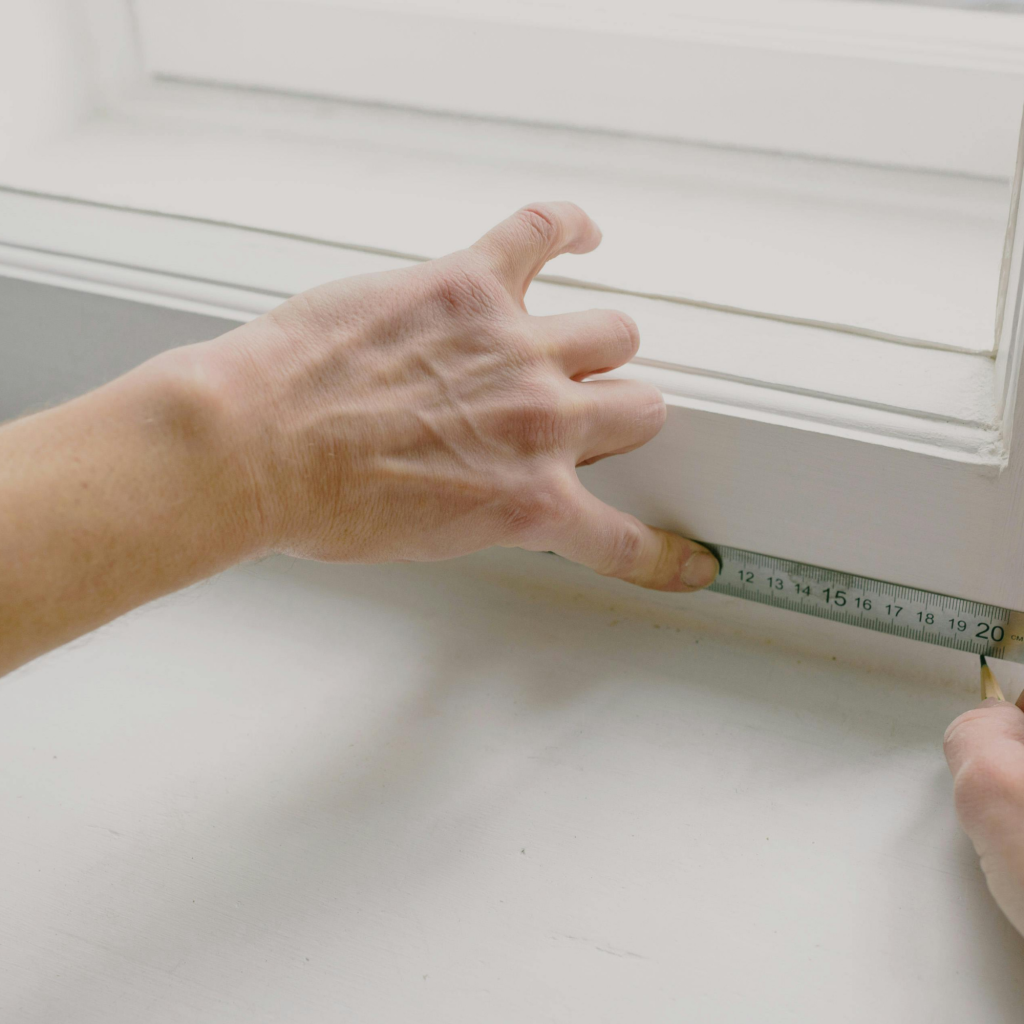
1 · WE SCAN THE HOUSE. A LiDAR camera, which produces an as-built plan — a measured, accurate drawing of what’s actually there. Not what the original plans said, not what the tax record says. What’s there. Houses are not built the way they were drawn, and a quarter inch out across a run of cabinets is somebody’s bad afternoon.
2 · WE DEVELOP PROPOSED LAYOUTS. What the space becomes.
3 · YOU MEET OUR DESIGNER AND MAKE SELECTIONS. This is where the money is, and it’s where you find out what you actually want versus what you thought you wanted in a showroom.
4 · WE WORK A BUDGET RANGE ALONGSIDE THE DESIGN, NOT AFTER IT. This is the part I’d want you to understand: the design decisions and the budget get made together. You’re not designing in the dark and then flinching at a number. You’re being told, as you go, what each decision does to the total, so you land somewhere you’re comfortable instead of discovering you’re not.
5 · THE DOCUMENTS GET FINISHED — scope, specs, selections, drawings.
6 · THEN THE PROPOSAL. And by the time you see it, it’s been through several versions and reviewed by our project directors and project managers, with real subcontractor bids behind the line items.
That’s why it’s a price and not a guess. Six people have looked at it against a document that says what’s being built.
Who Has To Get Paid Tor All That To Happen?
This is the part most contractors won’t put in writing, so here it is.
The design stage isn’t free, because it isn’t one person with a tape measure. It’s the measure scan, a designer, and a draftsman producing the drawings and the selections set. Those are real people doing real hours, and they’re doing them before you’ve decided whether you’re building anything.
So we take a retainer, and it runs about 3 to 5 percent of the projected budget. That percentage comes off the range we gave you on the first call — so if we talked about a project in the high five figures, you can do that math yourself right now.
It’s a bucket, not a fee. We hold it and bill against it hourly as the document work gets done. We try hard to make it a one-time fill — the goal is that you write one check at the start of design and never think about it again, and most of the time that’s how it goes.
Two things happen to whatever’s left in that bucket, and I’d rather you hear both from me now.
IF YOU BUILD WITH US, what’s left gets credited toward the deposit on your construction agreement. Design money you didn’t use follows you into the build. We don’t make money on the design phase — we only make money if we build it, so there’s no reason for us to keep it.
IF YOU DON’T BUILD WITH US, it isn’t returned. Whatever small amount is left stands as compensation for the hours already spent on your plans. Those hours were real and they were spent on your house, and I’m not going to pretend otherwise to make this paragraph sound better.
What you do get, either way: the documents.
Go through design with us and decide to build with somebody else — those drawings are yours. A permit-ready set, for your house, that you can hand to whoever you want. You are not paying us for a sales pitch that evaporates if you walk away. You paid for a set of documents and you own them, whoever swings the hammer.
What Makes the Design Retainer Run Out?
Revisions. Almost entirely revisions. And almost all of them are yours.
I’d rather tell you this now than after you’ve written the check, because it’s the one part of this you control completely.
Two things empty the bucket:
REDRAWING THE PLAN OVER AND OVER. The first redraft is normally covered — we expect one, it’s part of the process, nobody gets the layout right on the first pass. It’s the third and fourth and fifth versions that burn hours, and those hours come out of your retainer.
REWORKING SELECTIONS. Same thing with the designer. Choosing tile takes an appointment. Choosing tile, then changing it, then changing the cabinets to match the new tile, then changing the countertop to match the new cabinets — that’s three more appointments and it comes out of the same bucket.
If the bucket empties, you fill it back up. That’s the honest mechanism and there’s no version of it I can dress up.
Which is why the most valuable thing you can do before the designer meeting is narrow your own decisions down. Not finalize them — narrow them. Come in with two options you’d be happy with instead of twelve you’re curious about, and the retainer will very likely be the only check you write for design.
Doesn’t That Mean You Make Money When I Can’t Make Up My Mind?
Say it out loud, because you’re going to think it anyway. We hold a bucket of your money. We bill against it by the hour. Your revisions are what empty it. And if you walk away, we keep whatever’s in it.
So go ahead and ask the question: isn’t it in my interest for you to dither?
Three answers, and you can check all three.
ONE — THE HOURS ARE REAL AND THEY BELONG TO SOMEBODY ELSE. When a draftsman redraws your plan for the fourth time, that’s four hours of a draftsman. The bucket isn’t a fee I invented; it’s how people get paid for work that already happened. I’d be billing those hours whether you were watching or not, because somebody did them.
TWO — I DON’T MAKE MONEY ON DESIGN. I MAKE MONEY IF I BUILD IT. That’s not a slogan, it’s the arithmetic of the business, and it’s why unused money follows you into the construction deposit instead of staying in my pocket. Every week your design drags on is a week I’m not building your job, which is the part I actually want. A customer stuck on round five of a kitchen layout isn’t a customer making me money — it’s a customer getting tired, and tired customers don’t sign construction agreements.
THREE — AND THIS IS THE ONE I’D HOLD ME TO — LOOK AT WHAT I JUST TOLD YOU TO DO.
I told you to come to the designer with two options instead of twelve. I told you to count the decisions you’d change your mind about before you sit down with anybody. That’s instructions for spending less money with me. A business that wanted to run your meter would not publish that paragraph, and it’s four paragraphs above this one.
What I won’t tell you is that we never benefit from a slow design. We get paid for hours worked, and more hours is more billing. That’s true and I’m not going to pretend it isn’t. What I’ll tell you is that the phase isn’t where the money is, and that I’d rather have your build than your retainer — and you can judge that by whether anybody here is pushing you toward another revision or toward a decision.
★ How Do I Work Out How Much My Price Can Still Move?
You can do this at your kitchen table tonight, for any contractor’s number, and it’s the most useful ten minutes you’ll spend.
Write down every decision that hasn’t been made yet. Go room by room:
– Tile — floor, wall, shower
– Cabinets — line, door style, finish
– Countertop
– Fixtures — faucets, lighting, hardware
– Flooring, and where it stops
– Paint
– Windows and doors — brand, size, finish, and which ones are being replaced
– Plumbing and electrical that’s moving, and where it’s moving to
Count them. That count is how much your number can still move, and it moves in one direction.
Two unmade decisions on a vanity swap is nothing — go get three quotes and pick one. Thirty unmade decisions on a kitchen is not a job anybody can price in your driveway, and if somebody just did, you now know what you’re holding.
Then go through the list a second time and mark the ones you’d change your mind about.
That second count is what your design stage will cost you. The first count tells you how much the construction price can move. The second one tells you how many times somebody’s going to redraw your kitchen — and with us, that’s the number that decides whether the retainer is one check or two.
Same list. Two different questions. Both worth ten minutes at your own table before anybody’s in your house.
Where This Genuinely Doesn’t Suit You
Three honest ones.
IT COSTS MONEY BEFORE YOU KNOW WHETHER YOU’RE BUILDING. That’s the real objection and I’m not going to dress it up. You spend on design, you learn what the thing actually costs, and you might decide not to do it. You’d be holding a set of drawings and a decision not to build. Some people would rather have found that out for free.
IT’S SLOWER. Weeks, not an afternoon. If you need work started next week, we are the wrong call and I’d say so on the phone.
IT’S MORE PROCESS THAN A SMALL JOB NEEDS. One room, one trade, nothing being relocated? A good contractor can hold that in his head and you don’t need a document set to buy a vanity. Where it changes is when trades start stacking — when the tile guy, the plumber, the electrician and the cabinet installer all have to show up in an order, on a space that’s being reconfigured. Then the decisions outrun what anybody can carry, and paper stops being paperwork and starts being the only protection you’ve got.
What I’d Tell You If You Called Me
– Ask for a range on the first call. Expect to get one. Anybody who won’t give you one is managing you.
– Don’t accept a fixed price for a job with unmade selections in it. It isn’t a price. It’s a placeholder with your name on it.
– Ask what you own at the end of the design stage. If the answer is nothing, you’re funding somebody’s sales process.
– Narrow your choices down to two before you meet a designer, not twelve. It’s the single biggest thing in your control, and it’s the difference between one design check and two.
– Ask what your own city or county requires before you budget, because the jurisdiction decides what paperwork a job needs, not your contractor, and it changes the number.
– Make the decisions while somebody’s telling you what each one costs. That’s the whole value of a design stage, and it’s why it beats choosing tile after you’ve signed.
Want to Talk Numbers Before Design?
Want a straight range for what you’re thinking about, before anybody talks about design? Call and ask. We’ll tell you on the phone. We’re in Hampton, with a design center in Forsyth, and we work across Metro Atlanta and Middle Georgia.

Thomas Williams is part of the team behind All American Renovations, helping homeowners throughout Middle Georgia and Metro Atlanta make informed decisions about exterior renovations. With hands-on experience in siding, roofing, and home improvement projects, Thomas focuses on helping homeowners understand their options, compare materials, and know what to expect before starting a renovation.