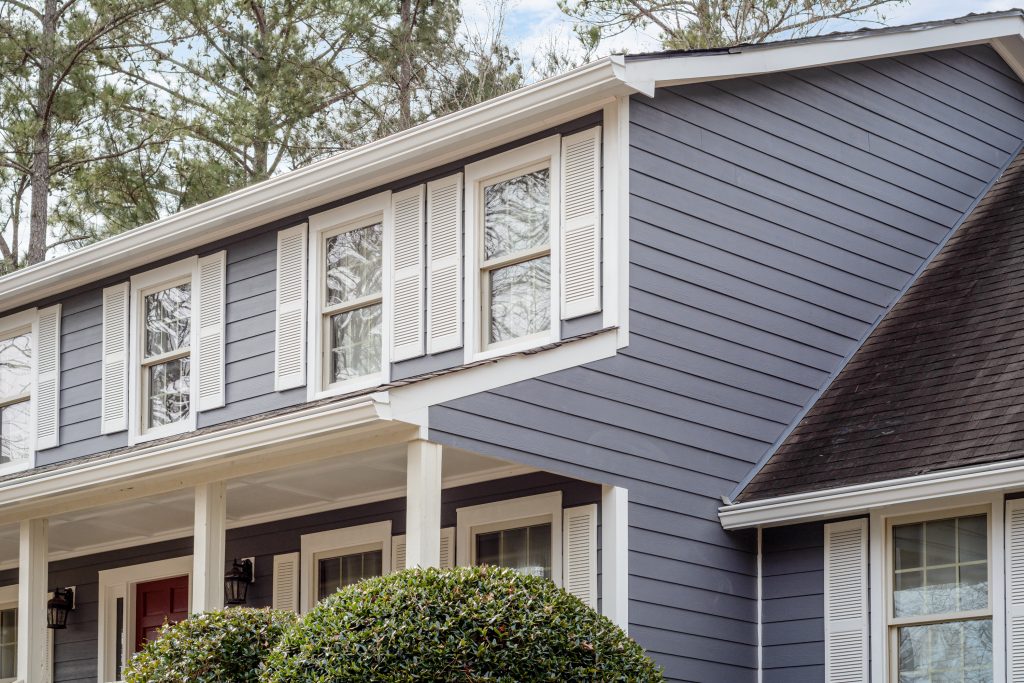
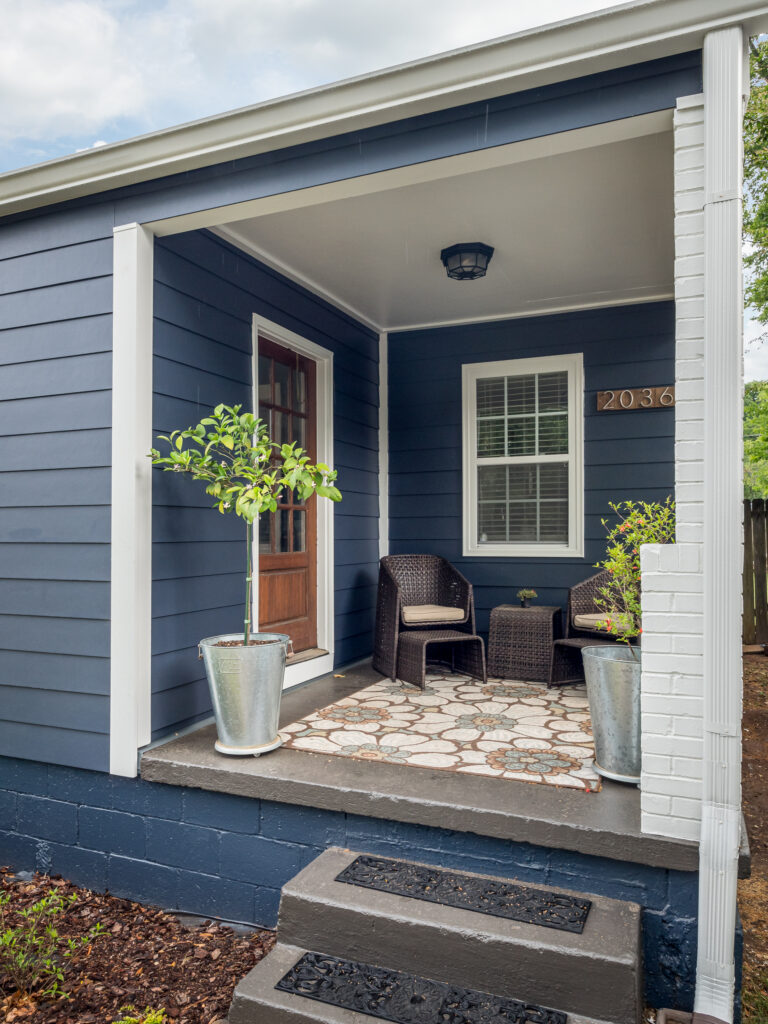
By Thomas Williams, All American Renovations James Hardie Alliance Contractor · Metro Atlanta and Middle Georgia Revised October 2026
Vinyl or Fiber Cement Siding? That is the Question
If the lowest cost is genuinely what matters most — a rental, a flip, a house you’re about to sell — vinyl is probably your answer, and I’ll tell you that on the phone rather than waste your afternoon. If you’re staying in the house and you care what it looks like in fifteen years, fiber cement. Here’s the honest version of both.
My Conflict Of Interest, Before Anything Else
I’m a James Hardie Alliance contractor. That agreement forbids me from installing any fiber cement except primed James Hardie or ColorPlus®, so I have an obvious stake in this comparison and you should read everything below knowing it.
BUT HERE’S THE PART THAT MATTERS MORE, AND IT CUTS THE OTHER WAY. That agreement says nothing about vinyl. NOBODY IS STOPPING ME FROM SELLING YOU VINYL SIDING. WE JUST DECIDED NOT TO.
I’ll tell you exactly why further down, because it’s the honest center of this whole page — and because “we chose not to carry it” is a very different statement from “we’re not allowed to.”
What I can and can’t tell you: we don’t install vinyl as a rule, and I’ve torn a great deal of it off houses. So most of what I know about how it ages comes from the demolition end rather than the installation end. Not to say I haven’t ever installed it, because we used to install a good bit of vinyl siding. Just as fiber cement has critical installation techniques, so does vinyl.
What does each one actually cost?
Vinyl is cheaper, and it’s cheaper twice.
The material costs less, and it’s faster and easier to hang — it’s light, it cuts with tin snips, and a crew moves across a wall quickly. Fiber cement is heavy, it’s slower, it takes more men and better tools, and the labor line reflects all of that.
On a typical house around here, a regular vinyl job runs $12,000 to $25,000. The low end is siding only. The high end is everything — full soffit and fascia, aluminum fascia wrap, and gutters, the whole exterior in vinyl and aluminum.
Now here’s the part I’d want explained if I were you, and most of this market has it wrong.
| Siding Type | About What it Costs Installed |
|---|---|
| Regular vinyl siding | $12,000 – $25,000 |
| Primed Hardie® siding, before paint | about the same money |
| Paint — labor and material | $6,000 – $9,000 |
| Primed and painted Hardie® siding | $18,000 – $34,000 |
The gap between regular vinyl and primed-and-painted fiber cement is the paint. That’s it. One line item, six to nine thousand dollars on a typical house — not the thirty thousand most people have in their heads.
And that paint money is already inside the painted-Hardie® numbers. Don’t add it on top.
As of October 2026, Metro Atlanta and Middle Georgia.
And foam-back vinyl is not the budget option
This is the one that catches people, so treat regular vinyl and foam-back vinyl as two different products.
Foam-back vinyl — the insulated kind — comes in at about the same price as primed and painted Hardie®. Sometimes higher.
Foam-back is genuinely better than regular vinyl. It’s more rigid, it’s quieter, it lays flatter over a wavy wall, and the foam is real continuous insulation across the studs — about R-2.0 to R-2.8, and the energy code counts it. I’m not knocking the product.
I’m telling you what it costs. If you think you’re buying the affordable option in foam-back vinyl, you’re not. You’re spending fiber cement money, and sometimes even more.
So go get both quotes. They’ll land close to each other. And once price is off the table, you get to decide this on the things that actually differ — which is the only honest way to decide it.
Which one holds its value when you sell?
There’s a report for this — the Cost vs. Value Report, published by Zonda. I’m going to use the Atlanta numbers rather than the national ones, because a national average doesn’t know what a Georgia buyer pays for.
Atlanta, 2025 report, on a 1,250 square foot siding job — so read the percentages, not the dollars:
- Fiber cement siding replacement: 107.3% recouped. Fifth-highest of the 28 projects measured there.
- Vinyl siding replacement: 80.2%. Ninth.
I’m not going to dress that up. In this market, re-cladding in vinyl is not projected to return what it costs.
Which means vinyl’s case isn’t a resale case. It’s a cash-flow case and a maintenance case, and both of those are real and worth having. Just don’t let anybody sell you vinyl as an investment, and don’t let anybody sell you fiber cement as free money either — those are Realtor estimates on a fairly small house, not sales data.
One honest footnote in fiber cement’s favor, though: Atlanta recoups less than the country does on almost every exterior project. Garage doors return 268% nationally and 218% here. Steel entry doors, 216% national and 157% here. So fiber cement clearing 100% in a market that discounts exterior work is the part worth noticing.
When is vinyl actually the right call?
More often than a fiber cement contractor is supposed to admit.
I ask everybody the same question early on: how are you hoping we can help? And sometimes the answer is some version of “I’m looking for the cheapest option. This is a rental, I don’t care about the return, I just need the house to look better for the least money.”
THAT CUSTOMER IS LOOKING FOR VINYL SIDING, AND I SAY SO. There’s no version of that conversation where I’m the right contractor, and pretending otherwise costs us both a couple of hours.
The honest case for regular vinyl:
- It costs less up front — six to nine thousand less than painted fiber cement on a typical house, and that is real money to a lot of people.
- It never needs painting. Not “doesn’t need it for fifteen years.” Never.
- It doesn’t rot and insects don’t eat it.
- It’s light, which matters on some structures.
- It repairs better than anything else out there. One damaged section is a genuinely easier fix on vinyl than on fiber cement.
If a rental, a flip, or a tight budget on a house you won’t be in for long is your situation — that’s a real answer, not a consolation prize.
And if you never want to paint again, ever — that is not James Hardie. ColorPlus® buys you at least fifteen years. It doesn’t buy you forever. Vinyl is closer to that promise than I am, and if that’s your line in the sand you’ve already got your answer.
So why don’t you sell it?
Because nothing stops us, this is the part I’d want explained if I were you.
VINYL IS NOT A HORRIBLE PRODUCT. I want to say that plainly, because most of what you’ll read about vinyl from a fiber cement contractor is written to make you feel stupid for considering it, and that isn’t honest.
IT JUST ISN’T A PRODUCT THAT STANDS THE TEST OF TIME AND WEATHER.
And that runs against how we decided to build this company. WE PUT ON PRODUCTS THAT ARE MEANT TO BE PERMANENT, OR AT LEAST TO LAST A REALLY LONG TIME. That’s the whole rule. It’s why our decking floor is four-sided capped, why there’s no cheaper version of our roof system, and why we stopped hanging five-inch gutters when the six-inch was pennies more.
Every one of those decisions costs us the customer who wanted the cheaper thing. This one does too.
SO THIS ISN’T ME TELLING YOU VINYL IS BAD. IT’S ME TELLING YOU WHERE OUR LINE IS, AND THAT VINYL SITS ON THE OTHER SIDE OF IT. You may look at your own house, your own timeline and your own budget and land somewhere different, and you’d be within your rights.
So what actually happens to vinyl over time?
This is where I’ll give you what I’ve seen rather than what a brochure says.
IT FADES. BADLY, AND UNEVENLY. Vinyl will do the same thing vinyl siding has been doing since the late eighties and early nineties.
Here’s the detail that makes it concrete, and it’s the one I’d want to know before buying. Take a full box of the original siding, put it in a shed the day it’s installed, and come back in five to ten years. IT WILL NOT MATCH THE WALL. Not close. Same product, same lot, one of them sat in the sun.
That matters the day something needs replacing — and something will, because VINYL CHIPS. Lawn mowers and weed eaters do it, along the bottom course, over and over. You go to swap those boards and the new ones don’t match.
You don’t have to paint vinyl. But you may end up wanting to, and that’s its own problem.
Can you paint vinyl siding?
I’M NOT GOING TO PUT MY NECK OUT THERE AND SAY YOU CAN’T PAINT VINYL. BUT I KNOW WHAT I’VE SEEN, AND IT USUALLY DOESN’T END WELL.
Here’s what I’ve seen.
A customer got a James Hardie price from me and then went quiet. About a year later they called back, and one of our project directors went out.
THEY’D PAINTED THEIR VINYL SIDING. IT HAD MELTED AND WARPED THE SIDING BADLY.
We ended up tearing it off and replacing it with primed James Hardie — and then painting that. TWO PAINT JOBS IN ABOUT A YEAR, plus a full siding replacement they’d been trying to avoid.
There are people who say you can paint vinyl, and people who do it. I’m telling you what happened on one house I have on video. Dark colors on a south-facing wall in Georgia are not a small thing.
Then what’s wrong with fiber cement?
Plenty, and if I only listed vinyl’s problems you’d be right not to trust the rest of what I have to say.
IT’S THE MOST EXPENSIVE OPTION ON THE WALL. No way around that — though as the table above shows, by less than people assume.
IT’S BRITTLE. Handled wrong, a board will snap in half.
IT’S HEAVY AND UNFORGIVING TO INSTALL. Which brings me to the real problem.
IT WILL SWELL IF IT GETS SATURATED, and then shrink back once it dries out — on your wall.
PRIMED STILL HAS TO BE PAINTED, AND REPAINTED. ColorPlus® buys you at least fifteen years without painting, which is a long time. BUT NEVER PAINT AGAIN? NOT GOING TO HAPPEN. If “I never want to touch this house again” is the actual goal, vinyl is closer to that promise than I am.
IT’S HARDER TO REPAIR. One damaged section on a vinyl wall comes out and goes back. A fiber cement patch is harder to make disappear.
THE HORIZONTAL PRODUCT ONLY RUNS HORIZONTAL. If you’ve got a seventies or eighties house with diagonal siding and you want it back that way, most of the fiber cement line won’t do it. People are disappointed by that regularly.
And here’s the one that cuts against me
In my experience, 99% of the problems I’ve ever seen with primed or ColorPlus® fiber cement come down to improper installation.
That’s my estimate, not a statistic. But sit with what it means.
FIBER CEMENT’S ADVANTAGE OVER VINYL IS ALMOST ENTIRELY CONDITIONAL ON WHO HANGS IT. And in Georgia, there is no siding license. None. Anybody can call themselves a siding contractor tomorrow morning.
So the honest conclusion is one I’d rather not print, but I’m going to anyway: A GOOD VINYL INSTALL WILL OUTPERFORM A BAD FIBER CEMENT INSTALL, AND IT ISN’T CLOSE. If your realistic choice is between a careful vinyl contractor and the cheapest fiber cement bid you can find, take the vinyl.
The expensive product only wins if it’s installed right. That’s why most of what I write about isn’t the product at all — it’s the nails, the joints, the flashing and the clearances.
Which one is on your house, Thomas?
FIBER CEMENT — PRIMED AND PAINTED, NOT COLORPLUS®. We built our house in 2020, mid-COVID, and I wanted a 5¼ smooth lap with a four-inch reveal plus some board and batten. The ColorPlus® upgrade wasn’t available on that profile at the time.
IF I WERE DOING IT AGAIN TODAY, I’D GO COLORPLUS®. The palette has come back since then and the factory finish is better than anything a sprayer puts on in a driveway.
What I’d tell you if you called me
- Answer the honest question first: how long are you staying? Under five years changes the math completely, and nobody asks it.
- Ask what the paint line is on your fiber cement quote. If the gap between your vinyl quote and your fiber cement quote is a lot bigger than that number, somebody should explain why.
- Get a foam-back vinyl quote and a painted fiber cement quote side by side. They’ll be close. Then stop deciding on price.
- If somebody quotes you vinyl, ask what’s going underneath it. Vinyl installers often lay fanfold foam over the old siding to flatten it, and then you’ve got two layers of siding on your house. Nine out of ten older houses I tear into already do.
- If you’re pricing fiber cement, ask about the install, not the brand. How do they stagger joints? What goes behind them? What’s their nailing standard? That’s the whole ballgame, and most bids won’t mention any of it.
- Ask any vinyl contractor how replacement boards will match in ten years. Listen to whether they’ve thought about it.
- Don’t paint vinyl because somebody told you it’d be fine. At least look up your specific product and your specific color first.
Not sure which one your house calls for?
If you’re in Middle Georgia or Metro Atlanta, we’ll walk it with you and give you a straight number. And if the honest answer is that you should be pricing vinyl instead — we’ll tell you that, because we’d rather lose an hour than sell you the wrong thing.
No pressure, and no obligation to use us. If you just want to understand what you’re looking at before you talk to anybody, that’s a fine reason to call.
Related Posts


Thomas Williams is part of the team behind All American Renovations, helping homeowners throughout Middle Georgia and Metro Atlanta make informed decisions about exterior renovations. With hands-on experience in siding, roofing, and home improvement projects, Thomas focuses on helping homeowners understand their options, compare materials, and know what to expect before starting a renovation.