By Thomas Williams, All American Renovations — CertainTeed ShingleMaster
On an average house around here, each step up costs about $1,000 to $1,500. Going from 3-tab to a standard architectural shingle buys you a heavier, longer-lasting roof that holds up better in wind. Going from architectural to Landmark Pro mostly buys you color. Knowing which step is which keeps you from paying for the wrong thing.
Shingles all look about the same on a sample board, and every one comes with a big warranty number. So it’s hard to know whether the upgrade someone’s offering is worth it, or whether you’re being sold up. Here’s what the three choices actually get you, including what’s on my own roof.
What does each one cost?
Most roofs we replace run $14,000 to $23,000 for an average house of about 25 to 30 squares in Landmark or Landmark Pro. (A square is 100 square feet of roof. The full breakdown is in our roof cost post.)
Within that, on an average house, as of September 2026:
| Step | Added cost |
|---|---|
| 3-tab → standard architectural (CertainTeed Landmark) | about $1,000–1,500 |
| Landmark → Landmark Pro | about another $1,000–1,500 |
That’s the whole ladder. Two steps, each roughly the same size. What you get for each step is very different.
Are 3-tab shingles still worth putting on?
We rarely install them anymore. Most of what we tear off is 3-tab, and most customers are moving away from it.
The market is too. Manufacturers are cutting back the colors and products they offer in 3-tab, because almost everyone has moved to architectural. I’m not going to tell you 3-tab is going away 100%. But fewer choices every year tells you where it’s heading.
When I see a customer put 3-tab back on, it’s almost always one of two reasons:
- Budget. They don’t have the extra $1,000 to $1,500 for the step up. That’s a real reason, and I’m not going to argue with it.
- Insurance. It’s a claim, the house had 3-tab, and insurance is paying to put back what was there. Making you whole means 3-tab for 3-tab. The upgrade is yours to pay for, and some homeowners don’t have the extra right then.
What’s actually different about an architectural shingle?
It’s a different kind of shingle, not just a nicer-looking one.
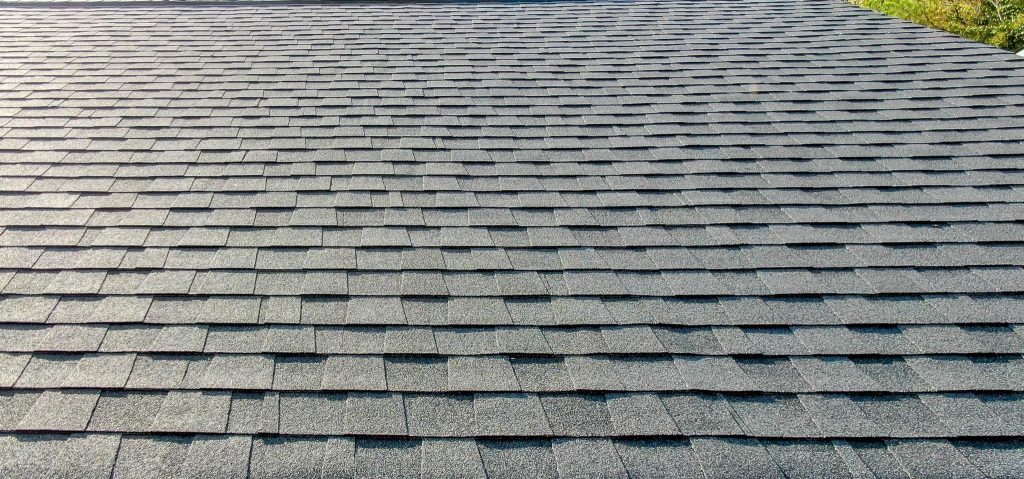
It’s one solid piece. A 3-tab shingle is three feet wide with two slots cut in it, making three tabs about a foot apart. Every tab is its own flap the wind can get under. An architectural shingle is one long, solid mat, three feet wide, with no slots. Better wind ratings come with that.
It’s heavier, and weight is what makes a shingle last. A shingle is a fiberglass mat coated in asphalt and covered in granules. The granules protect the mat. As long as they stay on, the mat underneath is protected. When they wear off, the fiberglass starts to show, and that’s the beginning of the end. A heavier shingle carries more granules, so it takes longer to wear down to the mat. We typically see architectural shingles outlast 3-tab.
It looks different on purpose. Architectural shingles are cut in an uneven pattern that some call dragon’s tooth and some call hound’s tooth. It’s meant to look like wood shake. That’s the whole idea behind the look.
On most houses, this first step is the one I’d push for if the budget allows. It’s a better roof, not just a better-looking one.
Is Landmark Pro worth another $1,000 to $1,500?
Here’s the honest answer: about 90% of the time, customers upgrade to Landmark Pro for the color.
Landmark Pro comes in CertainTeed’s “Max Def” colors, which are richer and more vivid than the standard line. Some of it, I’ll say plainly, is keeping up with the Joneses. People want their roof to look better than their neighbor’s. That’s allowed. It’s your house.
Here’s what else you get, according to CertainTeed’s own specs:
- A heavier shingle. Same logic as above: more weight, more granules, longer life. In my experience that holds.
- A longer algae-streak warranty: 30 years on Landmark Pro, 25 on standard Landmark. That covers the black streaks that show up on roofs in our humidity.
Here’s what you don’t get: a better wind warranty. Both carry the same one, 15 years at 110 mph, with the same upgrade available. If wind is why you’re considering Landmark Pro, it’s the wrong reason.
So is it worth it? If the color matters to you, yes, and it’s a small slice of the total job. If you’re looking at a roof you’ll never think about as long as it doesn’t leak, standard Landmark is a good roof and I’d put it on without a second thought.
What’s on my house: Landmark Pro, in Georgetown Gray.
Doesn’t a 50-year or lifetime shingle last 50 years?
No. This is the biggest misunderstanding in roofing.
When you hear 25-year 3-tab, 50-year architectural or lifetime architectural, it sounds like how long the roof will last. It isn’t. It’s a manufacturer’s warranty against manufacturing defects. It says what the manufacturer will cover if the shingle was made wrong. It doesn’t promise that your roof will be on the house that long.
An architectural shingle does last longer than a 3-tab. Just don’t pick one because of the number on the bundle. Pick it because it’s heavier and holds up better in wind. That’s a whole post of its own, and I’m writing it.
⭐ Check it yourself: what’s on your roof, and is it wearing out?
You can do both from the ground.
Which shingle do you have? Stand in the driveway and look at the bottom edge of a row. If you can count the tabs, one, two, three, each about a foot wide, repeating in a straight line, it’s 3-tab. If the edge is uneven and staggered, like wood shake, with no regular slots, it’s architectural.
Is it wearing out? Look for three things:
- Granules in your gutters, and piled up at the bottom of your downspouts where the water flushes them out. It looks like coarse sand. On an older roof, that means the shingles are shedding their protection.
- Shiny, thin spots on the shingles. That’s the fiberglass mat showing through where the granules are gone.
- Leaks inside the house. By then it’s past wearing out.
If you see the first two on a 3-tab roof that’s been up a long time, it’s time to start pricing a new one, and now you know what the choices cost.
What I’d tell you if you called me
- If the budget allows, skip 3-tab. The step to architectural buys a better roof, not just a better look.
- Buy Landmark Pro for the color, not the wind. If you love the color, it’s worth it. If you don’t care, standard Landmark is a good roof.
- Ignore the years on the bundle. It’s a defect warranty, not a life expectancy.
- On an insurance job, ask what the upgrade costs before you sign. Insurance puts back what you had. Anything better is your choice to pay for.
- Look in your gutters. They’ll tell you a lot about your shingles without anybody climbing a ladder.
Want to see them side by side?
Our proposals usually show two or three shingle options with the price of each, so you can see what the step up costs instead of taking my word for it. If you’re in Middle Georgia or Metro Atlanta and your roof is showing its age, call us and we’ll walk you through the options on your house.

Thomas Williams is part of the team behind All American Renovations, helping homeowners throughout Middle Georgia and Metro Atlanta make informed decisions about exterior renovations. With hands-on experience in siding, roofing, and home improvement projects, Thomas focuses on helping homeowners understand their options, compare materials, and know what to expect before starting a renovation.